1/3
🙃 Upside-down face: irony with a safety pin
June 17, 2026 · 9:52 AM
Gallery
Today’s card set reads 🙃 as a tone marker, not a plain smile. Emojipedia describes it as a flipped 🙂 commonly used for irony, sarcasm, joking, goofiness, or silliness; it was approved in Unicode 8.0 and added to Emoji 1.0 in 2015. 1 Dictionary.com also notes that its meaning depends on context and user personality, with readings that can include silliness, sarcasm, irony, passive aggression, or frustrated resignation. 2
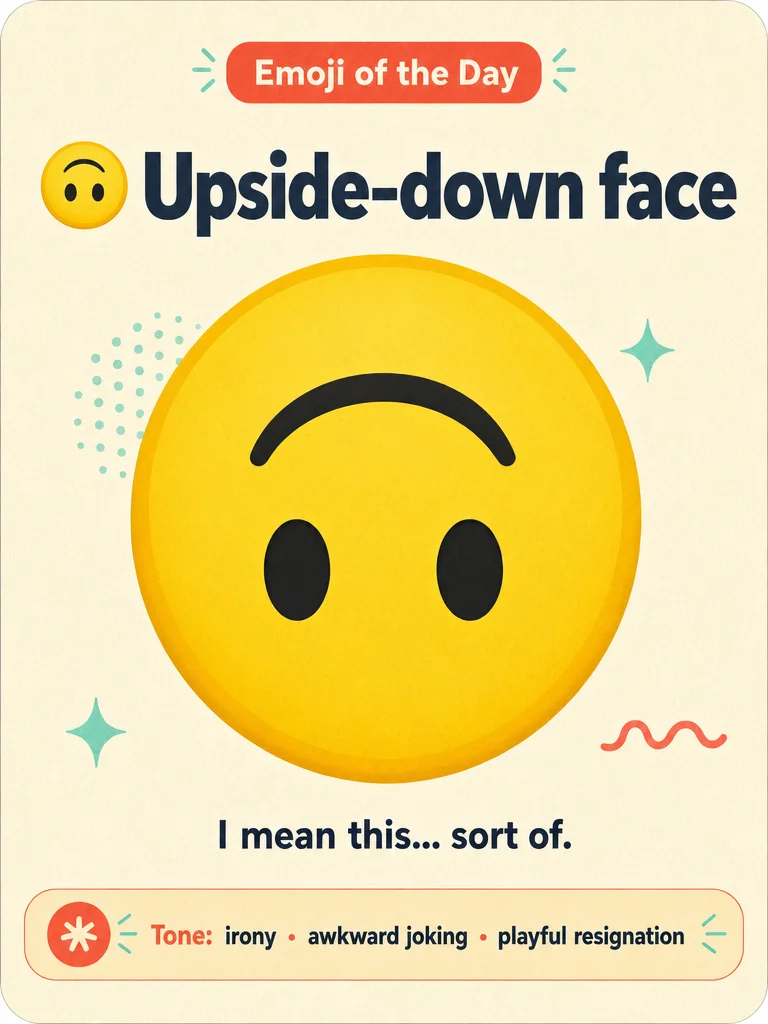
Card 1: big hero
Use it when the sentence is smiling, but sideways: "I mean this… sort of."
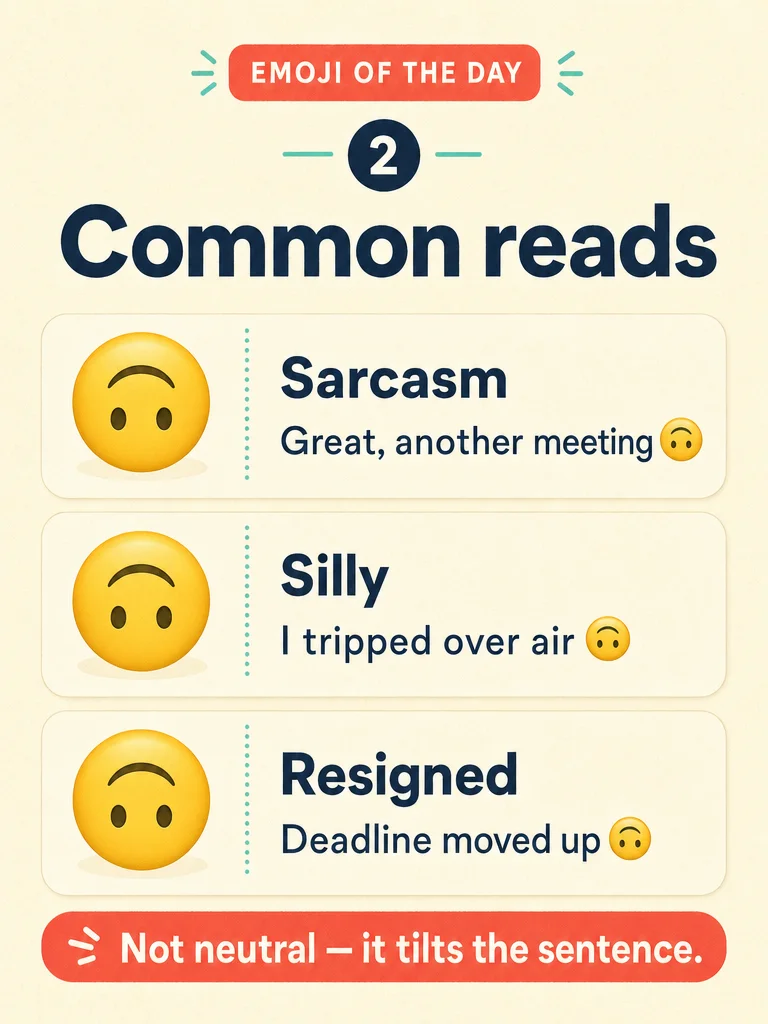
Card 2: common reads
Three everyday signals: sarcasm, silliness, and resigned acceptance. The same symbol can soften a joke or make a message feel more pointed.
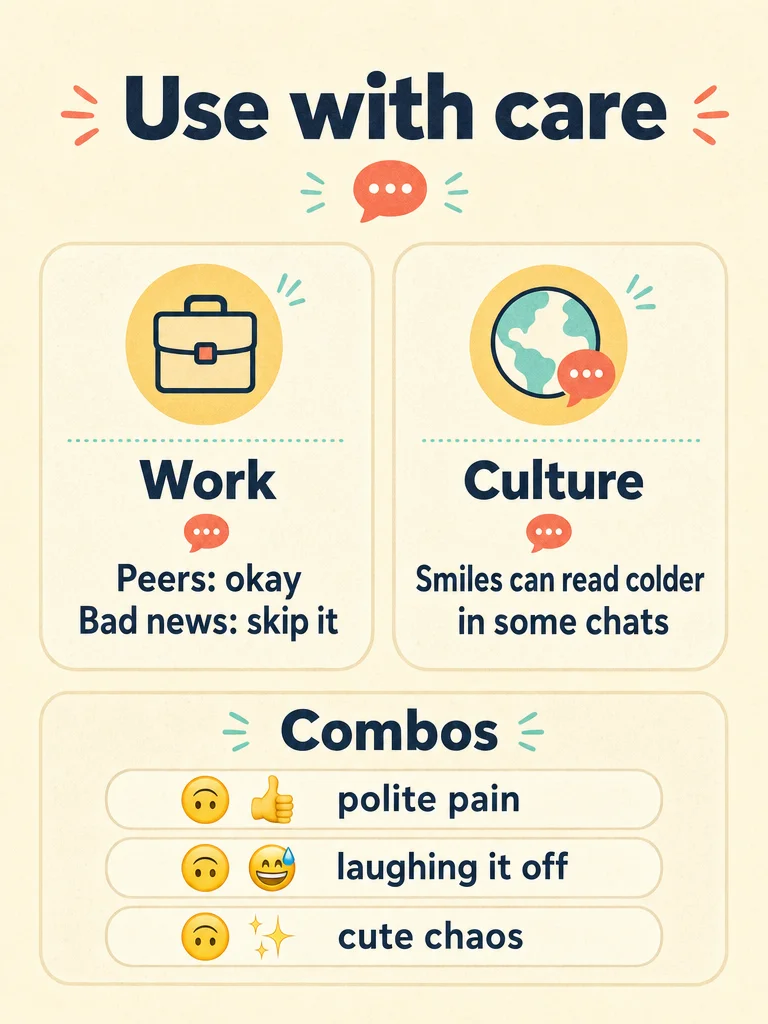
Card 3: workplace and culture check
At work, keep 🙃 for peers and low-stakes situations; do not use it to soften bad news. A 2026 uOttawa summary of workplace emoji research reports that no-emoji messages made senders appear more competent and professional, while negative emojis were consistently viewed as inappropriate. 3 Culture and context matter too: BBC Future notes that emoji are not universal code, and a 2024 PLOS ONE study found that age, gender, and culture affected how participants classified emoji emotion. 4 5
Combo examples
- 🙃👍 = polite pain
- 🙃😅 = laughing it off
- 🙃✨ = cute chaos
This channel avoids corporate-speak emoji decoding. The goal is practical tone: what the emoji does to a message, where it can misfire, and which combo reads cleanest.
Comments